

Titanium Alloy Dominates The Core Support Track For Astronomical Telescopes
Sep 19, 2026
Leave a message

To capture starlight, astronomical telescopes rely not only on optical lenses but also on micrometre‑level stable support structures. For large‑aperture ground‑based facilities and space‑borne optical payloads, conventional aluminium and steel materials suffer from thermal deformation under temperature swings, dead‑weight loads and corrosion. Gr5 titanium alloy has gradually become the material of choice for precision astronomical optical support components, including primary‑mirror trusses, mirror mounts, flexible connectors and optical bases.
I. Limitations of Conventional Materials
1.Thermal deformation
Field‑site and space environments feature extreme temperature differences. Even micrometre‑scale thermal expansion and contraction of materials can displace lenses, causing blurred images and distorted star points.
2.Dead‑weight loads
Large‑aperture lenses are heavy. Supporting components must deliver high load‑bearing capacity while remaining lightweight to avoid structural sagging and tracking stuttering.
3.Service‑life stability
Operating in high‑altitude, high‑humidity and space‑vacuum environments calls for corrosion resistance, fatigue resistance and anti‑ageing performance. Conventional materials are prone to failure and entail high maintenance costs.
II. Why Titanium Alloy Is the Preferred Material for Opto‑Mechanical Structures
1.Light‑weight and high strength
With a density of approximately 4.4 g/cm³ - less than 60 % of that of steel - it boasts favourable specific stiffness. Weight reduction is achieved under equivalent strength, lowering loads on turntables and drive systems and enhancing the stability of celestial tracking and positioning, which suits high‑precision large‑aperture equipment.
2.Precision shape retention
It features low thermal expansion and low thermal conductivity, delivering controllable deformation under temperature variation. It can achieve thermal matching with optical lenses to mitigate image errors induced by temperature changes. Its moderate elastic modulus enables the fabrication of flexible hinges to release assembly stress, prevent lens distortion and guarantee imaging precision.
3.Superior environmental adaptability
Titanium alloy resists corrosion and oxidation, maintaining dimensional stability in high‑altitude, high‑humidity, vacuum space and wide‑temperature‑swing environments. Its excellent fatigue and ageing resistance prolong equipment service life and cut operation‑and‑maintenance costs.
III. Comprehensive Performance Outperforms Conventional Alternative Materials
Each material has its pros and cons. Titanium alloy strikes a good balance among performance, manufacturability and cost and therefore holds irreplaceable advantages:
- Invar: Extremely low coefficient of thermal expansion; yet high density and heavy dead‑weight restrict lightweight design, so it is only suitable for small fixed parts.
- Silicon carbide / zero‑expansion ceramics: Outstanding low‑thermal‑deformation performance; nevertheless, high brittleness creates challenges for processing complex‑shaped components, resulting in low yield rates and exorbitant costs, which hamper mass‑scale application.
- Aluminium alloy: Low cost and light weight; large thermal‑expansion coefficient leads to marked deformation under temperature variation and fails to meet requirements for high‑precision advanced observation.
- Steel: High strength; excessive dead‑weight, poor weather resistance and susceptibility to rusting and deformation.
✅ Titanium alloy: High strength, light weight, good thermal stability and sound machinability. It can be processed via forging and precision turning for standard parts, as well as via SLM metal additive manufacturing to produce monolithic hollow trusses and special‑shaped support seats. It accommodates customised design for astronomical equipment and balances high performance with mass‑production capacity.
IV. Empowering Space‑Ground Integrated Astronomical Observation Facilities
1.Ground‑based facilities
Applied in primary‑mirror supports for large‑aperture reflectors, secondary‑mirror brackets, lens‑barrel bases and equatorial‑mount bases to support high‑precision deep‑space observation.
2.Space‑borne facilities
Used for optical support rods, vibration‑isolation bases and on‑orbit connectors of space telescopes to withstand extreme space conditions.
3.Research‑grade and professional astrophotography telescopes
Titanium‑alloy mirror mounts, flexible retaining rings and fine‑tuning supports have become standard configurations for high‑end products.
China has mature technologies for Grade 5 titanium‑alloy forging, heat treatment and non‑destructive testing. Stable domestic supply of high‑precision components has been realised, ending dependence on imports, lowering supply‑chain costs for astronomical equipment and fostering independent development of the astronomical‑equipment industry.
V. Existing Industry‑Track Challenges and Future Trends
1. Existing Shortcomings
Higher raw‑material cost compared with aluminium alloy; demanding cutting‑process requirements; high standards for precision machining and surface treatment lead to higher manufacturing costs.
Pure titanium alloy shows drawbacks in thermal expansion under ultra‑deep‑space cryogenic conditions, calling for auxiliary compensation structures.
2.Development Outlook
Advances in powder metallurgy, metal additive manufacturing and precision forging raise yield rates for complex components and bring down costs.
Progress in domestic titanium‑material quality control and opto‑mechanical matching design steadily improves the cost‑performance ratio of titanium alloy.
3.Industry Value and Prospects
Reliable structural supports are indispensable for high‑quality astronomical imaging. Thanks to its comprehensive performance, titanium alloy acts as the invisible backbone of high‑end astronomical equipment.
As astronomical equipment evolves towards larger apertures, higher resolution, lighter weight and on‑orbit deployment, titanium‑alloy opto‑mechanical supports will keep enabling deep‑space exploration for cosmic discovery.
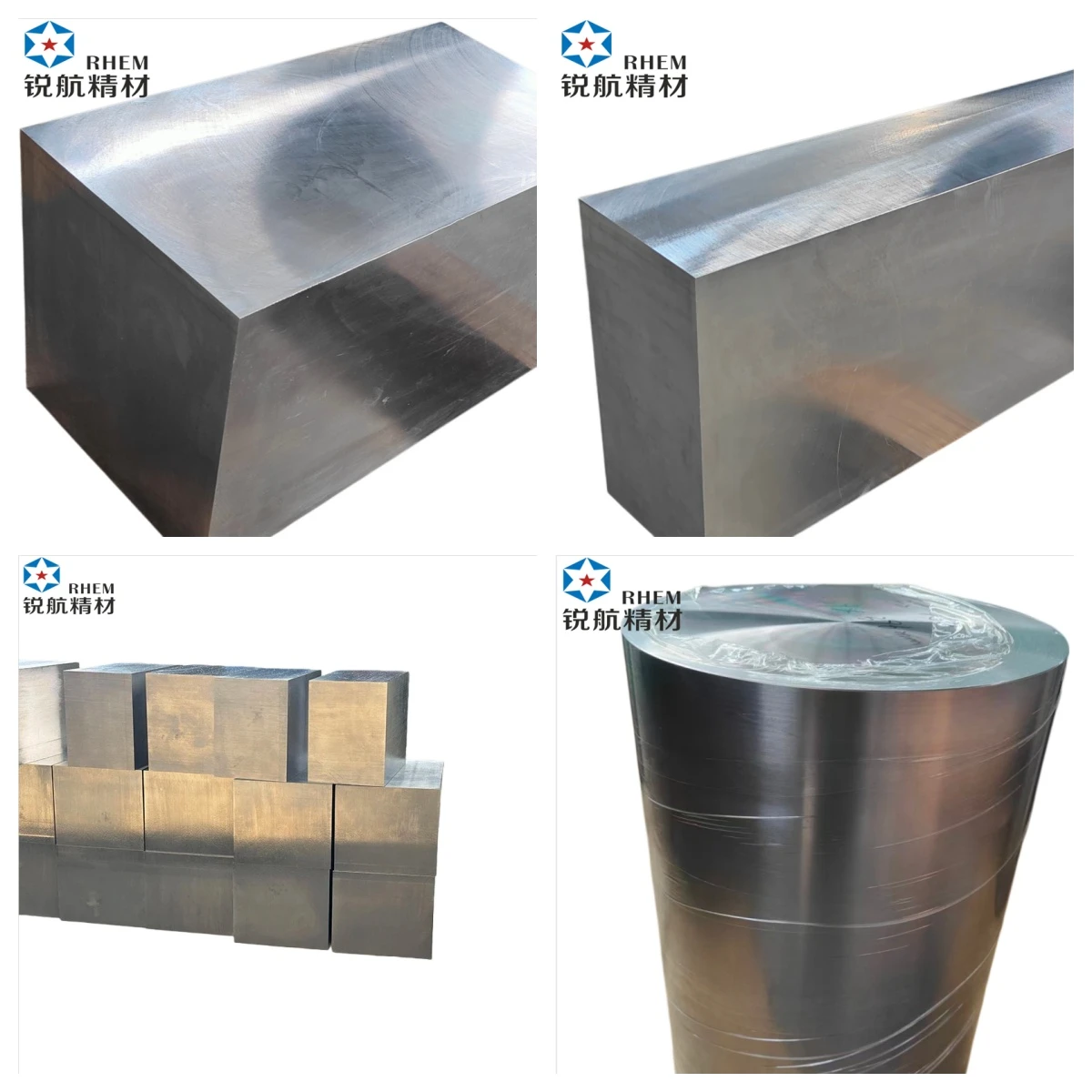
Ruihang, as a direct manufacturer of titanium products, supply optimal quality raw materials for your precision components production. If you have any purchasing needs, please feel free to contact us via email:Sam.Rui@bjrh-titanium.com