

What Are The Core Manufacturing Processes And Machining Technologies For Titanium Flange Blocks?
Sep 18, 2026
Leave a message

Titanium flange blocks are core connecting components for aerospace, petrochemical, ocean‑engineering and high‑end equipment. Titanium alloys feature low density, high strength, high‑and‑low‑temperature resistance, corrosion resistance and non‑magnetic properties. They can operate stably for long periods under extreme conditions such as strong acid‑alkali environments, heavy salt spray and alternating high pressure loads, ensuring sealing and pipeline jointing of high‑end equipment.
I. Material Properties and Machining Difficulties of Titanium Flange Blocks
Titanium flanges commonly adopt Grade 2 pure titanium and Grade 5 titanium alloy complying with ASTM B381 and ASME B16.5 standards, for general corrosion‑resistant and high‑strength load‑bearing applications respectively.
Poor thermal conductivity: Its thermal conductivity is only 1/4 of stainless steel and 1/6 of carbon steel. Cutting heat concentrates in the cutting zone, which readily causes tool burning, workpiece surface burn‑in and coarse grain structures.
High chemical activity: At high temperatures, titanium easily adheres to oxygen, nitrogen and tool materials to form hardened layers, resulting in poor surface roughness, dimensional deviation and even micro‑cracks.
Severe work hardening: Surface hardness rises after plastic deformation, making secondary machining difficult and prone to stress concentration.
Low elastic modulus: Workpiece spring‑back occurs during cutting, bringing challenges to controlling dimensional tolerances, flatness of sealing faces and precision of bolt holes.
II. Core Manufacturing Process Flow for Titanium Flange Blocks
1. Blank Forming
- Forging: Preferred for aerospace and petrochemical industries for high‑pressure and high‑reliability working conditions. Temperature‑controlled forging of titanium blanks refines grains and eliminates defects for superior pressure‑bearing capacity and fatigue resistance. It requires strict temperature control due to the narrow temperature window, with proper machining allowance reserved.
- Plate cutting: Applied for large‑diameter, low‑load corrosion‑resistant parts. Blanking is done via plasma cutting or wire‑cutting. It delivers low cost and fast lead time yet inferior pressure‑bearing performance compared with forgings.
- Powder metallurgy near‑net shaping: Combining cold isostatic pressing and vacuum sintering, this process achieves high material utilization. However, its density and mechanical properties are moderate, mostly used for lightweight low‑load high‑end civil components.
2. Precision Heat Treatment
Blanks are susceptible to deformation and cracking. Vacuum annealing (vacuum degree ≥1×10⁻³ Pa) is adopted to avoid oxidation and hydrogen absorption. For Grade 2: 600‑650 °C; for Grade 5: 700‑750 °C. Hold for 2‑4 hours and cool with the furnace to relieve stress and homogenize grains. Solution treatment and aging may be added for high‑strength products to improve strength and hardness.
3. Precision Machining
Adopt coated carbide tools with positive rake angles. Use brand‑new cutting edges for finish machining to reduce tool adhesion and work hardening. Implement layered cutting at low spindle speed, moderate feed rate and small cutting depth to release stress. Apply high‑pressure cooling with titanium‑special cutting fluid; dry cutting is prohibited. Special attention shall be paid to the precision of sealing faces, bolt holes and end faces to prevent leakage and guarantee geometric tolerances.
4. Surface Treatment
- Pickling and passivation: Remove oil contaminants and oxide scales and generate passivation films for acid‑alkali resistance, suitable for chemical and hydrometallurgical industries.
- Anodizing: Form hard oxide films for improved wear resistance and salt‑spray resistance, applicable for marine and outdoor high‑pressure environments.
- Precision polishing: Mirror polishing for flanges removes tool marks and enhances high‑pressure sealing performance.
III. Key Machining Technologies and Process Optimization Points
1.Anti‑deformation control technology
Titanium alloys tend to deform through spring‑back. Separate roughing and finishing operations. Leave machining allowance after roughing and hold the workpiece to release internal stress. Combine with symmetrical layered cutting to restrain workpiece warping and stabilize dimensional accuracy.
2.Tool life extension and cutting stability technology
Deploy coated carbide tools together with minimum quantity lubrication to mitigate wear. Standardize tool replacement for finish‑cutting to avoid dull cutting edges and ensure consistent precision in mass production.
3.Accurate metallographic structure control technology
Intelligent temperature control locks process parameters for forging and heat treatment to reduce metallurgical defects, refine and homogenize grains, and guarantee mechanical properties including strength, toughness and fatigue resistance.
IV. Finished‑Product Inspection and Quality Control System
1.Dimensional accuracy
Measure outer diameter, thickness, flatness of sealing faces, position and perpendicularity of bolt holes using coordinate measuring machines, micrometers and feeler gauges to ensure qualified tolerances.
2.Surface quality
Inspect for cracks, scratches, oxidation and other defects by visual observation plus magnifiers. Measure surface roughness of sealing faces with
roughness testers.
3.Internal non‑destructive testing
Carry out ultrasonic and radiographic testing to detect hidden internal defects such as pores, inclusions and micro‑cracks.
4.Mechanical properties
Conduct sampling tests including tensile test, hardness test, impact test and fatigue test to verify strength, toughness and anti‑fatigue performance.
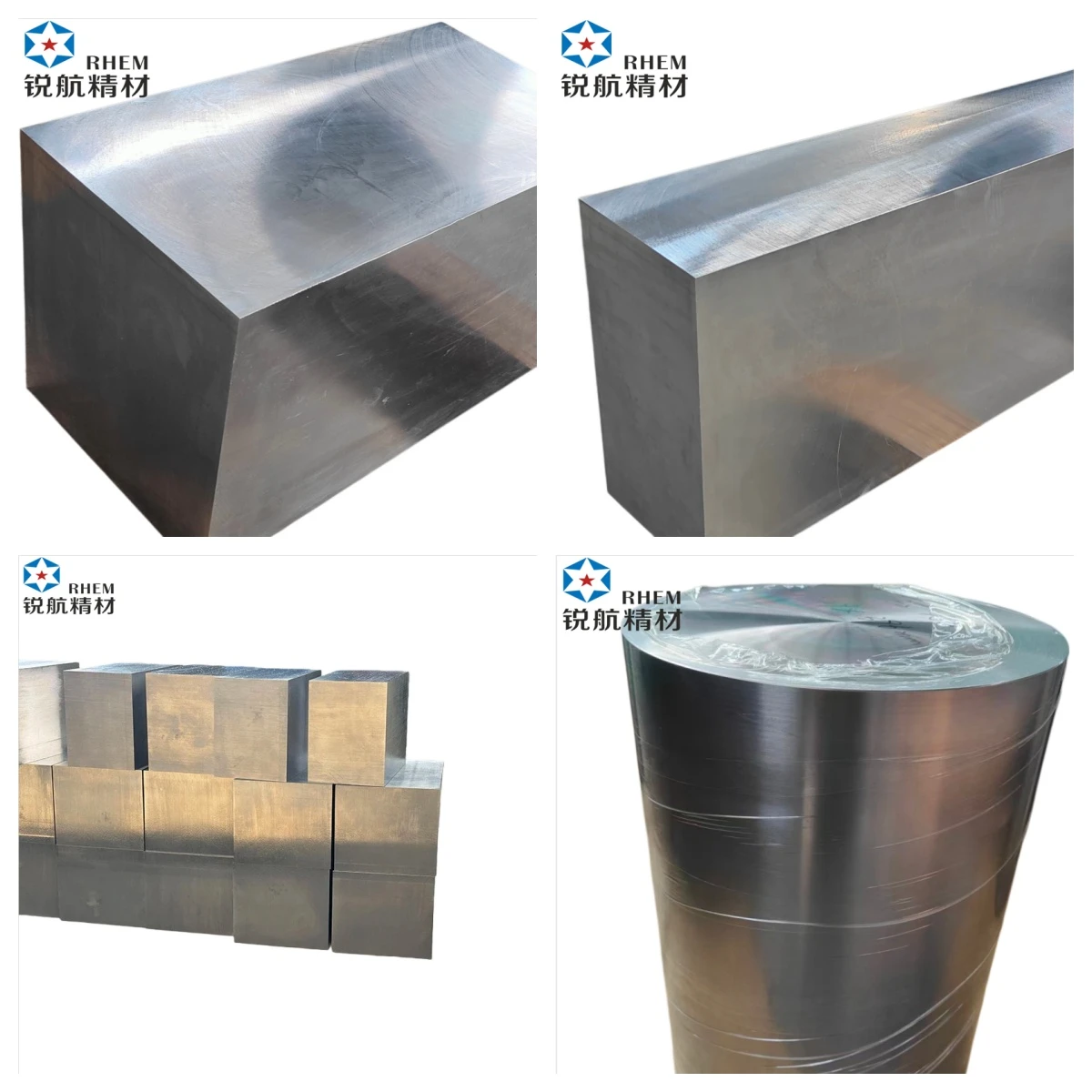
Ruihang Group is the manufacturer of titanium alloy products, supplying titanium bars, plates, forgings, wires, tubes etc. For inquiries and quotations, please contact us at Sam.Rui@bjrh-titanium.com