

What is the formability of titanium alloy plates?
Nov 20, 2025
Leave a message
Hey there! As a supplier of titanium alloy plates, I often get asked about the formability of these amazing materials. So, I thought I'd take a few minutes to break it down for you.
First off, let's talk about what formability actually means. In simple terms, formability is the ability of a material to be shaped or formed into a desired shape without cracking, tearing, or otherwise failing. When it comes to titanium alloy plates, formability is a crucial factor because these plates are often used in applications where they need to be bent, stretched, or otherwise manipulated into complex shapes.
Now, titanium alloys are known for their high strength, corrosion resistance, and lightweight properties, which make them a popular choice in a wide range of industries, including aerospace, automotive, and medical. But their formability can vary depending on a few key factors.
One of the main factors that affects the formability of titanium alloy plates is the alloy composition. Different titanium alloys have different chemical compositions, which can influence their mechanical properties and, in turn, their formability. For example, some titanium alloys are more ductile, meaning they can be stretched or bent more easily without breaking. Others may be more brittle and have a lower formability.
Another important factor is the heat treatment of the titanium alloy plates. Heat treatment can significantly alter the microstructure of the alloy, which can have a big impact on its formability. For instance, annealing is a common heat treatment process that can improve the ductility and formability of titanium alloys by reducing internal stresses and making the material more malleable.
The thickness of the titanium alloy plates also plays a role in their formability. Thinner plates generally have better formability than thicker ones because they are more flexible and easier to bend or shape. However, thinner plates may also be more prone to wrinkling or buckling during the forming process, so it's important to find the right balance.
Now, let's take a look at some specific types of titanium alloy plates and their formability.
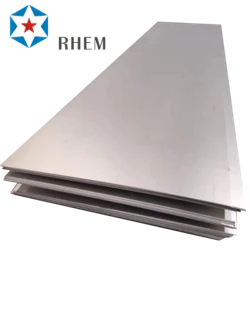

Gr12 Titanium Plate
Gr12 Titanium Plate is a popular titanium alloy that contains aluminum, molybdenum, and nickel. It has good formability, especially when compared to some other high-strength titanium alloys. Gr12 titanium plates can be cold formed to a certain extent, but for more complex shapes, hot forming may be required. The alloy's relatively high ductility makes it suitable for applications where bending, flanging, or other forming operations are needed.
AMS 4911 Gr5 Titanium Plate
AMS 4911 Gr5 Titanium Plate, also known as Ti-6Al-4V, is one of the most widely used titanium alloys. It has excellent strength and corrosion resistance, but its formability is a bit more challenging compared to some other alloys. Gr5 titanium plates are typically hot formed because they have a relatively low ductility at room temperature. However, with proper heat treatment and forming techniques, it's possible to achieve good formability and create complex shapes.
Gr23 Titanium Plate
Gr23 Titanium Plate is a high-strength, low-alloy titanium alloy that is often used in aerospace and medical applications. It has good formability, especially when it comes to cold forming. The alloy's combination of strength and formability makes it a great choice for applications where both structural integrity and complex shapes are required.
So, how can you ensure good formability when working with titanium alloy plates? Here are a few tips:
- Choose the right alloy: Select a titanium alloy that has the appropriate formability for your specific application. Consider factors such as the required shape, the forming process, and the end-use requirements.
- Optimize the heat treatment: Work with a reputable supplier who can provide titanium alloy plates that have been heat treated to optimize their formability. Annealing or other heat treatment processes can make a big difference in the material's ability to be formed.
- Use the right forming techniques: Depending on the alloy and the shape you need to create, you may need to use different forming techniques. For example, cold forming may be suitable for some alloys and simple shapes, while hot forming may be necessary for more complex geometries.
- Control the forming parameters: Pay close attention to the forming parameters, such as the forming speed, pressure, and temperature. These parameters can have a significant impact on the formability and the quality of the final product.
In conclusion, the formability of titanium alloy plates is a complex topic that depends on several factors, including the alloy composition, heat treatment, thickness, and forming techniques. As a supplier of titanium alloy plates, I'm here to help you choose the right material and provide you with the support you need to achieve the best results.
If you're interested in purchasing titanium alloy plates or have any questions about their formability, feel free to reach out. I'd be happy to discuss your specific requirements and help you find the perfect solution for your project.
References
- "Titanium Alloys: Properties, Processing, and Applications" by John C. Williams
- "Forming of Titanium and Titanium Alloys" by The Minerals, Metals & Materials Society