

Can titanium alloy tubes be used in the marine industry?
Nov 10, 2025
Leave a message
Can titanium alloy tubes be used in the marine industry?
The marine industry presents a highly challenging environment for materials. With constant exposure to saltwater, high pressures at depth, and the need for durability in harsh weather conditions, the selection of appropriate materials is crucial. Titanium alloy tubes have emerged as a potential candidate for various applications in this industry, and in this blog, we'll explore whether they can indeed be used effectively in the marine sector.
Properties of Titanium Alloy Tubes
Titanium alloys are renowned for their exceptional properties that make them attractive for marine applications. Firstly, they have a high strength - to - weight ratio. This means that titanium alloy tubes can withstand significant forces while being relatively lightweight compared to other metals like steel. In marine vessels, reducing weight is of utmost importance as it can lead to improved fuel efficiency and better maneuverability.
Secondly, titanium alloys exhibit excellent corrosion resistance. Saltwater is extremely corrosive, and many metals quickly deteriorate when exposed to it. Titanium forms a passive oxide layer on its surface, which protects it from the corrosive effects of saltwater, preventing rust and degradation. This property ensures that titanium alloy tubes can have a long service life in marine environments, reducing the need for frequent replacements and maintenance.
Another important property is their good fatigue resistance. In the marine industry, components are often subjected to cyclic loading due to waves, vibrations, and the movement of the vessel. Titanium alloy tubes can withstand these repeated stress cycles without failing easily, making them suitable for applications where reliability is key.
Applications of Titanium Alloy Tubes in the Marine Industry
Shipbuilding
In shipbuilding, titanium alloy tubes can be used in various systems. For example, they can be employed in the ship's piping systems. Whether it's for the supply of seawater for cooling purposes or the transportation of other fluids on board, the corrosion resistance of titanium alloy tubes ensures that the pipes remain intact and functional over a long period. The high - strength - to - weight ratio also helps in reducing the overall weight of the ship, contributing to better performance.
The use of Gr5 Titanium Welded Tube is particularly common in shipbuilding. Gr5, also known as Ti - 6Al - 4V, is a widely used titanium alloy due to its high strength and good weldability. It can be used in structural components of the ship, such as frames and supports, where both strength and corrosion resistance are required.
Offshore Oil and Gas Platforms
Offshore oil and gas platforms operate in a harsh marine environment. Titanium alloy tubes are ideal for use in these platforms. They can be used in the riser systems, which are responsible for transporting oil and gas from the seabed to the platform. The corrosion resistance of titanium alloy tubes ensures that the risers can withstand the corrosive nature of the seawater and the hydrocarbons being transported.
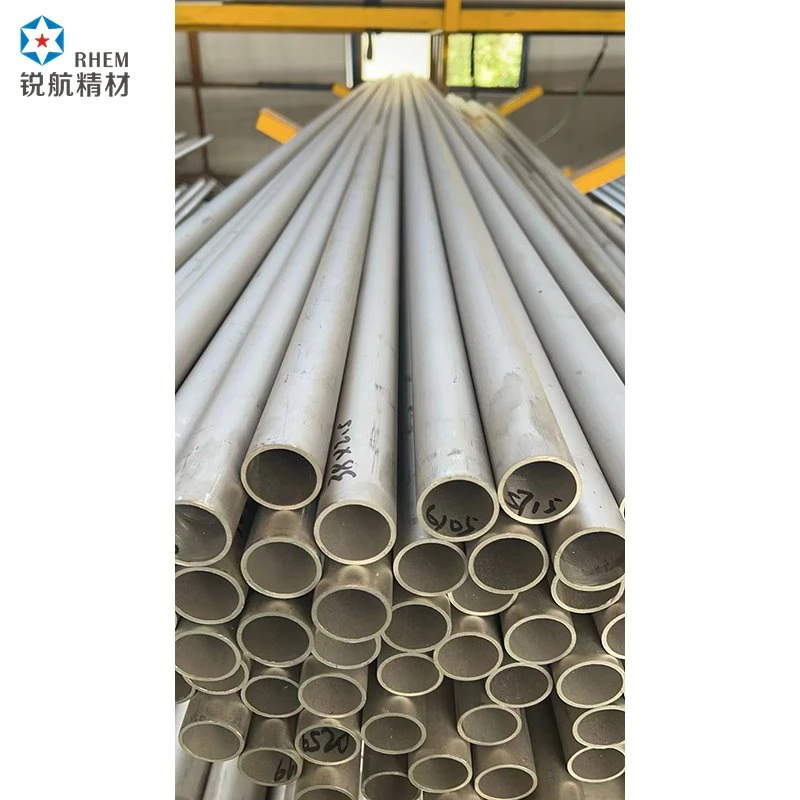

Gr12 TItanium Seamless Tube is often used in offshore applications. Gr12 titanium alloy contains molybdenum and nickel, which enhance its corrosion resistance in reducing environments. It can also withstand high pressures, making it suitable for deep - sea applications where the pressure is extremely high.
Desalination Plants
Desalination plants are an important part of the marine infrastructure, especially in areas where freshwater is scarce. Titanium alloy tubes are used in the heat exchangers of desalination plants. The heat exchangers are responsible for transferring heat during the desalination process. The excellent corrosion resistance of titanium alloy tubes ensures that they can handle the highly saline water without corroding, maintaining the efficiency of the heat transfer process.
Gr7 Titanium Seamless Tube is a popular choice for desalination plants. Gr7 alloy has a higher resistance to crevice corrosion and stress - corrosion cracking in chloride - containing environments, which are common in desalination processes.
Challenges and Considerations
While titanium alloy tubes offer many advantages for the marine industry, there are also some challenges and considerations. One of the main challenges is the high cost of titanium alloys compared to other metals. The production process of titanium is complex and energy - intensive, which drives up the price. This can be a deterrent for some marine projects, especially those with tight budgets.
Another consideration is the difficulty in machining titanium alloys. Titanium has a low thermal conductivity, which means that during machining, heat can build up quickly, leading to tool wear and poor surface finish. Specialized machining techniques and tools are required to work with titanium alloy tubes, which can add to the overall cost of the project.
However, it's important to note that the long - term benefits of using titanium alloy tubes, such as reduced maintenance costs and longer service life, can offset the initial high cost in many cases.
Our Offer as a Titanium Alloy Tubes Supplier
As a supplier of titanium alloy tubes, we understand the unique requirements of the marine industry. We offer a wide range of titanium alloy tubes, including Gr5 Titanium Welded Tube, Gr12 TItanium Seamless Tube, and Gr7 Titanium Seamless Tube. Our tubes are manufactured to the highest quality standards, ensuring that they meet the demanding requirements of the marine environment.
We have a team of experts who can provide technical support and advice on the selection of the most suitable titanium alloy tubes for your specific marine application. Whether you're involved in shipbuilding, offshore oil and gas, or desalination plants, we can help you find the right solution.
If you're interested in purchasing titanium alloy tubes for your marine project, we encourage you to contact us for a detailed discussion. We're committed to providing you with the best products and services to meet your needs.
References
- ASM Handbook, Volume 2: Properties and Selection: Nonferrous Alloys and Special - Purpose Materials. ASM International.
- Titanium: A Technical Guide, Second Edition. John R. Davis (Editor). ASM International.
- Marine Corrosion: Causes, Prevention, and Case Histories. George S. Frankel. Wiley - Interscience.