

Are titanium alloy tubes expensive?
Dec 09, 2025
Leave a message
Are titanium alloy tubes expensive?
As a supplier of titanium alloy tubes, I often get asked whether titanium alloy tubes are expensive. The answer to this question isn't straightforward, as it depends on various factors. In this blog post, I'll delve into the elements that influence the cost of titanium alloy tubes, compare them with other materials, and help you understand if they're worth the investment.
Factors Affecting the Cost of Titanium Alloy Tubes
Raw Material Costs
Titanium is a relatively rare metal. Extracting it from its ores is a complex and energy - intensive process. The primary ore of titanium, ilmenite and rutile, requires multiple steps to refine into pure titanium. These steps include the Kroll process, which involves reducing titanium tetrachloride with magnesium. The high energy consumption and the need for specific equipment in these processes contribute to the high cost of the raw titanium material.
Moreover, different grades of titanium alloys have different compositions. For instance, Gr5 Titanium Welded Tube is made of Ti - 6Al - 4V, an alloy that contains aluminum and vanadium in addition to titanium. The cost of these alloying elements, along with the difficulty of achieving the right composition during the manufacturing process, adds to the overall raw material cost.
Manufacturing Complexity
Producing titanium alloy tubes is a challenging task. The tubes need to be formed, shaped, and finished to meet strict quality standards. The high reactivity of titanium at high temperatures means that special manufacturing techniques are required. For example, during the welding process, titanium must be shielded from oxygen, nitrogen, and hydrogen to prevent contamination, which can degrade the mechanical properties of the tube.
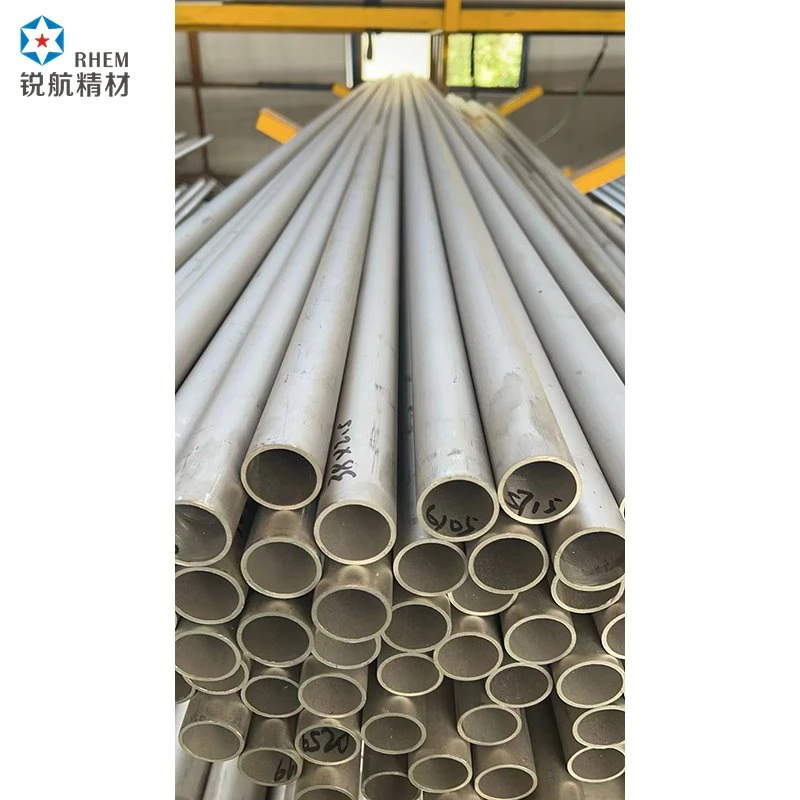
Seamless tube manufacturing, such as for Gr12 Titanium Seamless Tube and Gr5 Titanium Seamless Tube, involves processes like piercing, rolling, and drawing. These processes demand precision equipment and highly skilled operators. Any deviation in the manufacturing process can lead to defective tubes, increasing the production cost as the scrap rate goes up.
Quality Control
Titanium alloy tubes are often used in critical applications such as aerospace, medical, and chemical industries. Therefore, strict quality control measures are in place. Non - destructive testing methods like ultrasonic testing, eddy - current testing, and X - ray inspection are used to detect internal and surface defects. These testing procedures are time - consuming and require specialized equipment, which further adds to the cost of the tubes.
Comparison with Other Materials
When compared with more common materials like steel or aluminum, titanium alloy tubes are generally more expensive. Steel tubes are widely available and have a well - established manufacturing process, which keeps their cost relatively low. Aluminum is also a lightweight metal, but its strength - to - weight ratio is not as high as that of titanium alloys.
However, the performance of titanium alloy tubes justifies the higher cost in many applications. Titanium has excellent corrosion resistance, especially in harsh environments such as saltwater or chemical - rich atmospheres. This means that titanium alloy tubes have a longer service life compared to steel or aluminum tubes, reducing the need for frequent replacements.
In the aerospace industry, the high strength - to - weight ratio of titanium alloy tubes is crucial. Using titanium tubes can reduce the overall weight of an aircraft, leading to lower fuel consumption and operating costs. In the medical field, titanium's biocompatibility makes it an ideal material for implants, where the cost is often secondary to the patient's well - being.
Are They Worth the Investment?
The answer to whether titanium alloy tubes are worth the investment depends on the specific application. If you're working on a project where performance, durability, and safety are of utmost importance, then the higher cost of titanium alloy tubes is justified.
For example, in the oil and gas industry, where tubes are exposed to corrosive fluids and high pressures, titanium alloy tubes can withstand these harsh conditions for a long time. The initial investment in titanium tubes may be higher, but the long - term savings in maintenance and replacement costs can be significant.
In the automotive industry, as manufacturers strive to improve fuel efficiency and performance, the use of titanium alloy tubes in exhaust systems or engine components can offer advantages. Although the cost of these tubes is higher, the benefits in terms of weight reduction and improved performance can make them a worthwhile investment.
Conclusion
In conclusion, titanium alloy tubes are indeed more expensive than many other materials, but this is due to the high cost of raw materials, complex manufacturing processes, and strict quality control requirements. However, their superior performance in terms of corrosion resistance, strength - to - weight ratio, and biocompatibility makes them a valuable choice for many critical applications.
If you're considering using titanium alloy tubes for your project, I encourage you to contact us for a detailed discussion. We can help you understand the cost - benefit analysis based on your specific requirements. Whether you need Gr5 Titanium Welded Tube, Gr12 Titanium Seamless Tube, or Gr5 Titanium Seamless Tube, our team of experts can provide you with the best solutions.

References
- "Titanium: A Technical Guide" by Don Eylon
- "Materials Science and Engineering: An Introduction" by William D. Callister Jr. and David G. Rethwisch
- Industry reports on titanium production and application in aerospace, medical, and chemical industries.