

What Is The Hot Rolling Process Of Titanium Plates?
Dec 20, 2025
Leave a message
The quality of titanium plates directly determines the reliability and safety of downstream applications. Hot rolling is a critical process in titanium plate production. Through high-temperature plastic deformation and microstructure control, it can achieve the dimensional forming of titanium plates and optimize the internal grain structure in order to enhance mechanical and processing properties.
I. Core Principle of the Hot Rolling Process
- Hot rolling of titanium plates is a rolling process conducted above 650℃-850℃. Its core is to improve the plasticity of titanium metal and reduce deformation resistance through high temperature. It enable the billet to undergo plastic deformation under the pressure of rolls to form thin plates of target dimensions. Meanwhile, high-temperature deformation and cooling will reconstruct grains, break coarse original grains, and form a uniform and fine recrystallized structure to optimize the strength
- Hot rolling has high processing efficiency and a wide range of rollable thicknesses, making it suitable for producing medium and thick titanium plates and processing billets. However, titanium has strong chemical activity at high temperatures and is easy to react with oxygen, nitrogen, and hydrogen to form brittle and hard compounds. It can lead to defects such as hydrogen embrittlement and oxygen embrittlement. So atmosphere protection and precise temperature control are key to the process.
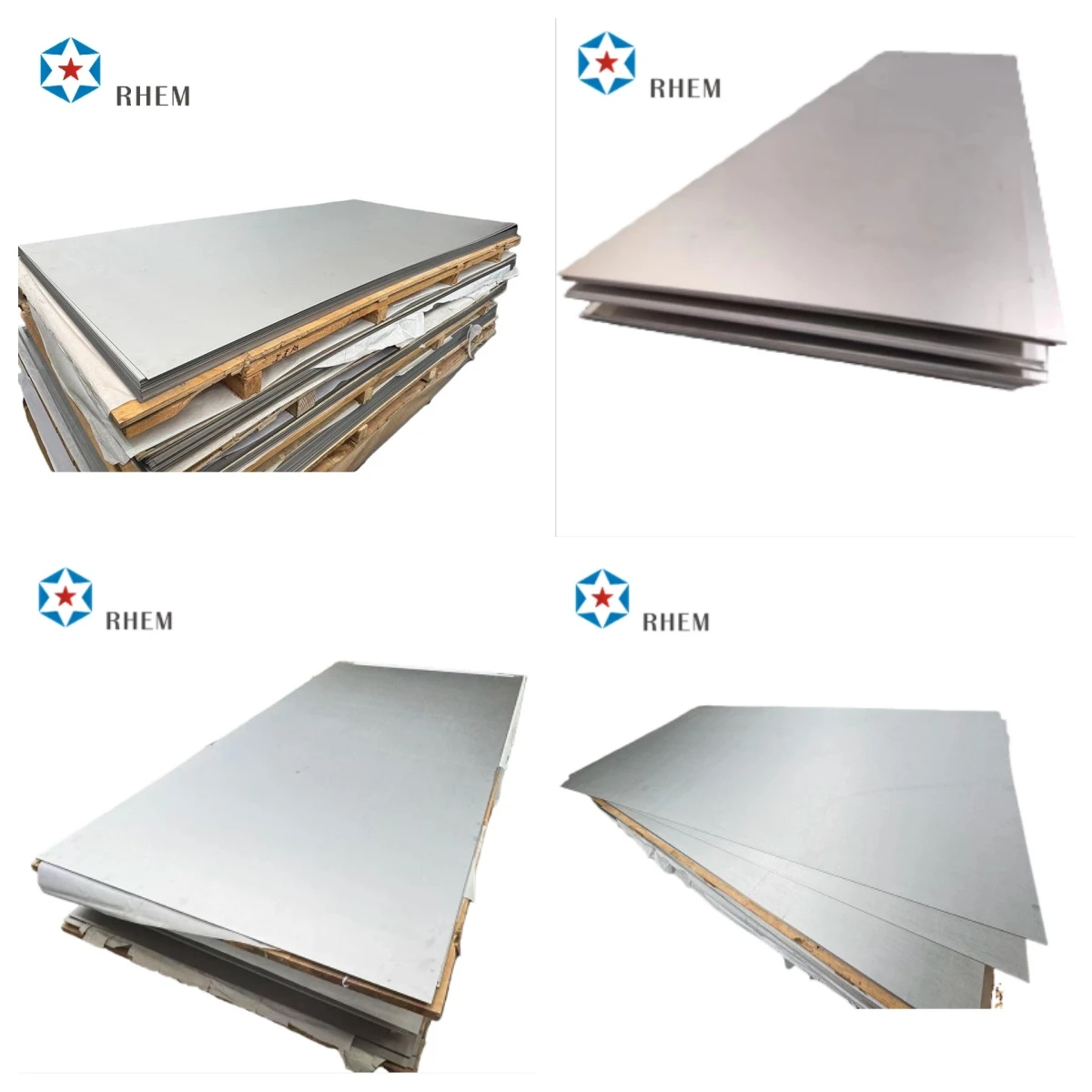
II. Core Process Flow of Titanium Plate Hot Rolling
- Billet Preparation and Pretreatment
Hot rolling billets are flat ingots/plates forged from titanium ingots, which must meet composition and microstructure standards without casting defects. Pretreatment consists of two steps:
- Removing surfaceoxide scale and oil stains through mechanical grinding or HF-HNO₃ pickling;
- Heating to 50-150℃ above the recrystallization temperature according to the alloy grade, using argon protection or vacuum heating to prevent oxidation and ensure uniform heating.
- Multi-Pass Hot Rolling Forming
After heating, the billet is rolled through multiple passes to reduce thickness to the target dimension, with three core parameters to control:
- Rolling temperature: Within the recrystallization temperature range in the process. The temperature is the highest in the first pass, and the rhythm is adjusted according to processing heat in subsequent passes.
- Reduction ratio: 20%-30% in the first pass to break grains, then reduced to 10%-20% in the next passes, and further reduced for high-strength alloys;
- Rolling speed: Matched with temperature and pressure parameters to avoid excessive oxidation caused by excessively high speed or reduced plasticity due to excessively low speed.
During rolling, rolling oil or inert gas is used for lubrication and cooling to reduce friction and oxidation.
- Post-Rolling Cooling and Finishing
After rolling, titanium plates are rapidly air-cooled to inhibit grain growth. After cooling, straightening, shearing, and surface finishing are performed sequentially.
- Heat Treatment and Inspection
Annealing treatment is needed to eliminate internal stress and optimize the structure. Finally, the inspections are necessary for dimensional accuracy, surface quality, and mechanical properties.
III. Key Technical Points of Hot Rolling Process
High-Temperature Atmosphere Protection Technology
Titanium is easy to embrittlement due to reactions with O, N, and H at high temperatures. It requires atmosphere protection. Mainstream methods include vacuum heating, inert gas-protected heating/rolling, and local inert gas injection protection; high-end aviation titanium plates use vacuum heating + argon-protected rolling to ensure component purity.

Precise Temperature Control Technology
Temperature is the core of hot rolling quality and requires precise control throughout the entire process. By means of multi-point temperature measurement in the furnace, real-time infrared monitoring of plate temperature, and intelligent system adjustment of heating power, rolling rhythm, and supplementary heating timing, defects such as uneven deformation and coarse grains are avoided.

Rolling Parameter Optimization Technology
Reduction ratio, rolling speed, and pass interval determine the microstructural and mechanical properties of titanium plates. Numerical simulation combined with experimental verification is used to establish an optimal parameter database for titanium materials of different grades and specifications. For example, "high-temperature heavy reduction + multi-pass uniform deformation" is adopted for Ti-6Al-4V thick plates to refine grains; for pure titanium thin plates, it is necessary to control the reduction ratio in the later stage and cooling speed to reduce residual stress.

Surface Quality Control Technology
Surface defects affect corrosion resistance and mechanical properties, requiring control in multiple links: pretreatment by pickling + mechanical grinding to remove oxide scale; use of special rolling oil during rolling to prevent scratches; surface finishing and repair of local defects after cooling.

Ruihang Group, a professional manufacturer of titanium and titanium alloy products, implements strict quality control throughout the entire production process from raw materials to finished products. We supply high-quality titanium rings,forgings,bars, plates and other titanium products etc. For more details,please contact us via the Email: Sam.Rui@bjrh-titanium.com