

What Alloy Material For 10000m Deep Sea Pressure Hulls?
Jun 25, 2026
Leave a message

Tremendous pressure exists at ten-thousand-meter ocean depths, and titanium alloy pressure hulls serve as the critical safety components of deep-sea equipment.
I. Deep-Sea Technological Revolution
Featuring high specific strength, outstanding corrosion resistance and stable low-temperature performance, titanium alloy stands as the optimal material for deep-sea pressure hulls, enabling significant weight reduction and extended service life.
The manufacturing standards for ten-thousand-meter manned pressure cabins are extremely stringent. Large-size thick-walled cabins demand rigorous tolerances for dimensional accuracy and welding reliability. Foreign countries have long monopolized core technologies covering materials, welding and inspection, forcing China to forge its own path independently.
II. Tackling Challenges from Scratch
1. Breakthroughs in Fundamental Materials
Conventional Gr 5 titanium alloy lacks sufficient strength to meet the development requirements of three-person ten-thousand-meter manned cabins. The Institute of Metal Research, Chinese Academy of Sciences independently developed Ti62A, a titanium alloy specially engineered for deep-sea applications. While retaining excellent welding toughness, its strength is 20% higher than that of Gr 5, resolving the issue of weld embrittlement under extreme deep-sea pressure. This alloy has become the dedicated base material for the Fendouzhe submersible, marking a leap from following to leading the world in deep-sea pressure-resistant materials.

Meanwhile, China has refined the mass production system for Gr 5-ELI titanium alloy to fit medium and shallow-sea equipment, establishing a full-range titanium alloy material system covering all ocean depths.
2. Hemispherical Forming of Plates
Extra-thick titanium alloy plates for ten-thousand-meter submersible cabins are prone to uneven composition, internal micropores and cracking under high pressure. Relying on ten-thousand-ton hydraulic presses and upgraded core equipment, domestic enterprises have realized integral forming of large-size hemispherical blanks. Proprietary processes eliminate micron-level pores, pushing the density of hull shells to 99.98%. Forging and annealing procedures have also been optimized to precisely control the roundness of spherical shells and avoid instability risks under high pressure, breaking reliance on foreign suppliers of large titanium forgings.
3. Mastery of Thick-Plate Welding
Overseas players have long monopolized core technologies for welding thick titanium alloys. Traditional welding methods easily trigger weld defects and stress concentration, resulting in low welding qualification rates. China has independently developed high-vacuum electron beam welding equipment capable of fully penetrating nearly 100-millimeter-thick titanium plates in a single pass, narrowing the heat-affected zone and eliminating weld embrittlement. Matching proprietary heat treatment techniques release residual welding stress, and the core welds have passed rigorous hydraulic and fatigue tests, filling the domestic technological gap in welding thick titanium alloy pressure hulls.
4. Self-developed Precision Inspection
Faced with foreign embargoes on high-end non-destructive testing equipment, domestic institutions jointly formulated exclusive inspection standards for titanium alloys, integrating multiple testing technologies to automatically identify micro-defects in hull shells and welds. A digital twin platform is deployed to simulate stress variations and predict potential defect risks, enabling closed-loop full-process quality control from blanks to finished products, with inspection accuracy reaching world-class levels.
III. From Single-Prototype Trial Production to Large-Scale Manufacturing
1. Self-sufficient Raw Material Supply
China accounts for 65% of global sponge titanium output, eliminating reliance on imported titanium feedstock. Leading manufacturers mass-produce deep-sea special titanium alloys, cutting delivery cycles in half and lowering overall raw material costs by 15%, thus ensuring stable, low-cost raw material supply for mass production.
2. Deployment of Intelligent Production Lines
Intelligent factories dedicated to deep-sea pressure hulls are equipped with a full suite of intelligent processing and inspection equipment. Unified standards have boosted part interchangeability by 60%. Integrated manufacturing processes have replaced segmented fabrication, slashing production cycles from 180 days to under 70 days, with an annual output exceeding 100 sets. Validated by multiple deep-sea projects, these production lines can supply bulk components for various deep-sea equipment.
3. Innovations in Advanced Manufacturing Processes
Breakthroughs have been achieved in near-net-shape integral forming and metal 3D printing, weld-free manufacturing technologies. The material utilization rate of spherical shells reaches 82%, cutting welding procedures by 80%, and the mechanical properties meet hydraulic certification requirements. Complementary anti-corrosion strengthening processes extend equipment service life and reduce subsequent operation and maintenance costs.
4. Complete National Standard System Established
A comprehensive set of national standards for deep-sea pressure hulls has been formulated based on real-vessel tests, ending monopoly by foreign standards. Products have expanded from military and scientific research applications to civil sectors including commercial diving, deep-sea oil and gas exploitation, and marine exploration, forming a virtuous cycle spanning technological R&D, large-scale production and market commercialization.
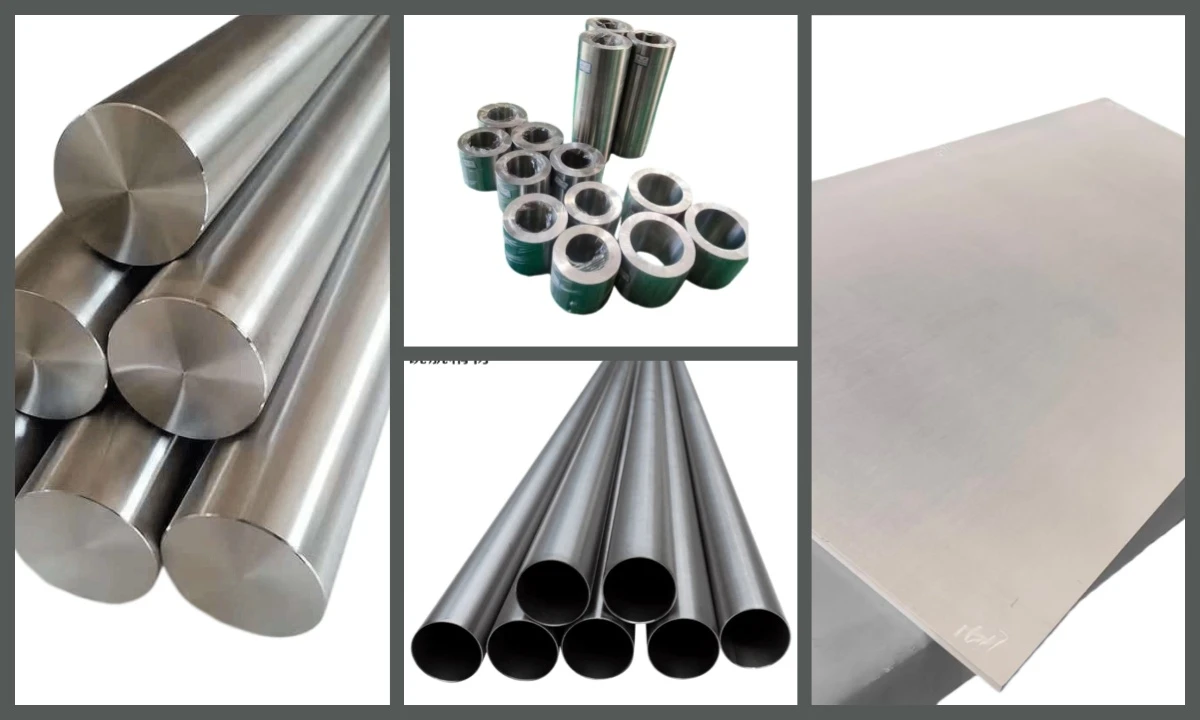
Ruihang, as a direct manufacturer of titanium products, supply optimal quality raw materials for your precision components production. If you have any purchasing needs for Gr5 titanium alloy products, please feel free to contact us via email: Sam.Rui@bjrh-titanium.com