

What is the hardness of pure titanium plates?
Nov 25, 2025
Leave a message
Hey there! As a supplier of pure titanium plates, I often get asked about the hardness of these amazing materials. So, I thought I'd take a moment to break it down for you.
First off, let's talk about what pure titanium is. Titanium is a super cool metal. It's lightweight, strong, and highly resistant to corrosion. When we say "pure titanium plates," we're referring to plates made from titanium that's pretty much just titanium, with very few other elements mixed in.
Now, the hardness of pure titanium plates isn't a one - size - fits - all kind of thing. It can vary depending on a few factors. One of the main factors is the grade of the titanium. There are different grades of pure titanium, and each grade has its own unique properties, including hardness.
Let's start with Grade 1 titanium. You can check out Gr1 Titanium Plate and Pure Gr1 Titanium Plate for more details. Grade 1 titanium is the softest among the commercially pure titanium grades. It has a relatively low hardness because it has the highest purity level. With a carbon content of less than 0.08% and oxygen content of up to 0.18%, Grade 1 titanium is very ductile. This means it can be easily formed into different shapes without cracking. Its low hardness also makes it a great choice for applications where you need a lot of flexibility, like in some medical implants or chemical processing equipment where corrosion resistance is key, but high hardness isn't a requirement.
On the other hand, we have Grade 4 titanium. You can find more info about it on Gr4 Titanium Plate. Grade 4 is the hardest of the commercially pure titanium grades. It has a higher oxygen content, which increases its strength and hardness. The oxygen acts as a solid - solution strengthener, making the titanium more resistant to deformation. Grade 4 titanium is often used in applications where you need a combination of high strength and corrosion resistance, such as in aerospace components or marine hardware.
To measure the hardness of pure titanium plates, we usually use the Rockwell or Brinell hardness tests. The Rockwell test is a quick and easy way to get a hardness value. It works by pressing a small indenter into the surface of the titanium plate with a specific amount of force and then measuring the depth of the indentation. The Brinell test, on the other hand, uses a larger indenter and measures the diameter of the indentation left on the surface after applying a load.
The hardness values can also be affected by the manufacturing process. For example, if the titanium plate is cold - worked, its hardness will increase. Cold - working is a process where the metal is deformed at room temperature, which causes the grains in the metal to become more tightly packed. This increases the resistance to further deformation and thus raises the hardness. Heat treatment can also have an impact on hardness. Annealing, which is a heat treatment process where the metal is heated to a specific temperature and then slowly cooled, can reduce the hardness of the titanium plate and make it more ductile.
Another thing to consider is the thickness of the pure titanium plate. Thicker plates may have different hardness characteristics compared to thinner ones. In thicker plates, the internal stresses and the way the metal cools during manufacturing can affect the hardness distribution throughout the plate.
When it comes to choosing the right pure titanium plate for your project, understanding the hardness is crucial. If you're working on a project that requires a lot of bending and shaping, a softer grade like Grade 1 might be your best bet. But if you need a plate that can withstand high loads and wear, Grade 4 could be the way to go.
I know this might seem like a lot of technical stuff, but it's really important to get it right. After all, using the wrong grade of titanium plate with the wrong hardness can lead to all sorts of problems, like premature failure of the component or difficulty in manufacturing.
So, if you're in the market for pure titanium plates and you're still not sure which grade and hardness are right for you, don't hesitate to reach out. We're here to help you make the best decision for your specific needs. Whether you're a small - scale manufacturer or a large - scale industrial company, we can provide you with high - quality pure titanium plates that meet your requirements.

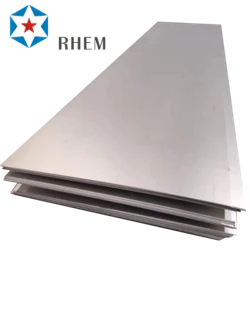
In conclusion, the hardness of pure titanium plates is a complex but important aspect to consider. It varies depending on the grade, manufacturing process, thickness, and other factors. By understanding these factors, you can make an informed decision when purchasing pure titanium plates. If you have any questions or want to discuss your project further, feel free to get in touch. We're always happy to have a chat and help you find the perfect solution.
References:
- ASM Handbook Volume 2: Properties and Selection: Nonferrous Alloys and Special - Purpose Materials
- Titanium: A Technical Guide by J. R. Davis