

Can titanium alloy tubes be used in the telecommunications industry?
Oct 29, 2025
Leave a message
Hey there! As a supplier of titanium alloy tubes, I often get asked if these tubes can be used in the telecommunications industry. Well, let's dive right into it and explore this topic.
First off, let's talk a bit about titanium alloy tubes. Titanium alloys are known for their amazing properties. They're super strong, yet lightweight. They also have excellent corrosion resistance, which means they can withstand harsh environments without getting damaged easily. These properties make titanium alloy tubes a great candidate for many industries, and the telecommunications industry is no exception.
In the telecommunications industry, reliability and durability are key. Telecommunication equipment needs to work properly all the time, no matter what the conditions are. That's where titanium alloy tubes come in. Their high strength-to-weight ratio is a huge advantage. For example, in the construction of telecommunication towers, using titanium alloy tubes can reduce the overall weight of the structure. This not only makes the installation process easier but also cuts down on the cost of transportation and foundation construction.
Another important aspect is corrosion resistance. Telecommunication equipment is often installed outdoors, exposed to all kinds of weather conditions, including rain, snow, and humidity. Titanium alloy tubes can resist corrosion from moisture and various chemicals in the air. This means that the equipment made with these tubes will have a longer lifespan, reducing the need for frequent replacements and maintenance.
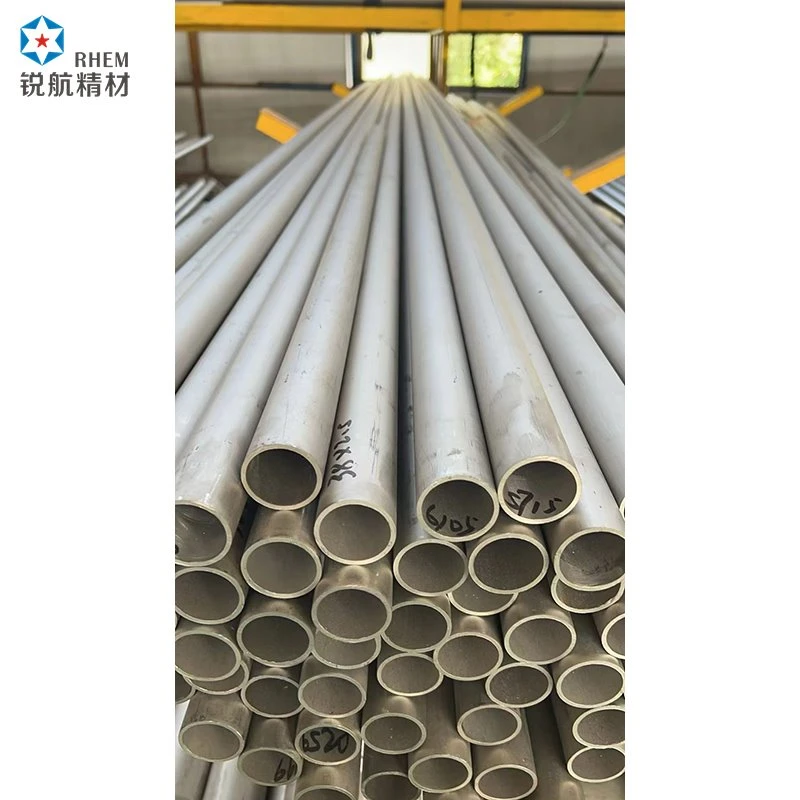
Let's take a look at some specific types of titanium alloy tubes that could be used in the telecommunications industry. One popular option is the Gr5 Titanium Seamless Tube. Gr5 titanium alloy, also known as Ti-6Al-4V, is one of the most widely used titanium alloys. It has high strength, good ductility, and excellent fatigue resistance. These properties make it suitable for applications where the tubes need to withstand mechanical stress, such as in the framework of telecommunication antennas.
The Gr12 Titanium Welded Tube is another great choice. Gr12 titanium alloy contains elements like molybdenum and nickel, which enhance its corrosion resistance, especially in environments with reducing acids. In the telecommunications industry, this type of tube could be used in areas where the equipment is exposed to acidic pollutants, such as in industrial areas or near the coast.
And then there's the Gr12 Titanium Seamless Tube. Similar to the welded tube, it offers the same corrosion resistance benefits. The seamless design, however, provides better structural integrity, making it ideal for applications where pressure and fluid flow are involved, like in the cooling systems of telecommunication equipment.
Now, let's talk about some practical applications of titanium alloy tubes in the telecommunications industry. In the construction of telecommunication towers, as I mentioned earlier, titanium alloy tubes can be used for the main framework. Their lightweight nature allows for taller and more stable towers to be built. This is crucial for improving the signal coverage area.
For telecommunication antennas, titanium alloy tubes can be used to support the antenna elements. The high strength and fatigue resistance of these tubes ensure that the antennas can maintain their shape and performance over a long period, even in windy conditions.
In the internal components of telecommunication equipment, titanium alloy tubes can be used in the cooling systems. The corrosion resistance of the tubes prevents the buildup of rust and other contaminants, which could otherwise reduce the efficiency of the cooling system. This helps to keep the equipment at an optimal operating temperature, improving its performance and reliability.
But it's not all sunshine and rainbows. There are a few challenges when it comes to using titanium alloy tubes in the telecommunications industry. One of the main issues is the cost. Titanium alloys are generally more expensive than traditional materials like steel or aluminum. However, when you consider the long-term benefits, such as reduced maintenance and longer lifespan, the cost can be justified.
Another challenge is the processing difficulty. Titanium alloys require special manufacturing techniques, which can increase the production time and cost. But as a supplier, we've got the expertise and the right equipment to handle these challenges. We can produce high-quality titanium alloy tubes that meet the specific requirements of the telecommunications industry.
So, can titanium alloy tubes be used in the telecommunications industry? The answer is a resounding yes! With their unique properties, they offer many advantages that can improve the performance, reliability, and lifespan of telecommunication equipment.
If you're in the telecommunications industry and are interested in using titanium alloy tubes for your projects, I'd love to have a chat with you. We can discuss your specific needs and see how our titanium alloy tubes can fit into your plans. Whether you need Gr5 Titanium Seamless Tubes, Gr12 Titanium Welded Tubes, or Gr12 Titanium Seamless Tubes, we've got you covered. Don't hesitate to reach out and start a conversation about your procurement needs.

References:
- "Titanium Alloys: Properties, Processing, and Applications" - A comprehensive book on titanium alloys and their various uses.
- Industry reports on the telecommunications sector regarding the use of advanced materials in equipment construction.