

Titanium Tubes : Core And Practical Approaches To Extend Service Life
Apr 04, 2026
Leave a message
Stability and durability of industrial systems rely heavily on pipelines. Titanium tubes excel in corrosion resistance and performance, outlasting ordinary metals in harsh environments such as chemical engineering, marine engineering, and power generation. They reduce corrosion damage and maintenance costs, making them widely adopted across many industries.
I. Core Causes of Industrial System Failure
They are mostly from pipeline corrosion, wear, and performance degradation under high temperature and pressure. Ordinary metal pipes are easy to break with corrosion, leakage, deformation, and rupture in harsh conditions like strong acids, alkalis, high salinity, high temperature, and high pressure. It leads to high operation and maintenance costs, frequent replacements, potential safety hazards, and shortened system service life.Titanium tubes can solve the problems of traditional pipes and effectively extend the service life of industrial systems.
II. Core Advantages
1. Exceptional Corrosion Resistance
Excellent corrosion resistance is the key to titanium tubes extending system service life. Titanium rapidly forms a dense and stable oxide film at temperatures ranging from room temperature to 550°C, isolating corrosive media. The film can self-heal and regenerate after wear, providing persistent protection.
- In chemical engineering, they resist strong acids and chlorides, with a corrosion rate much lower than stainless steel, reducing leakage and downtime.
- In marine engineering, they withstand seawater and salt spray, suitable for seawater desalination and offshore platform pipelines.
- In environmental protection, they resist acidic slurry corrosion in flue gas desulfurization systems, lowering replacement frequency.
- Data shows that titanium coolers in the chlor-alkali industry have a service life of over 20 years, compared to only 1–3 years for traditional stainless steel.
2. High Strength and Light Weight
Titanium tubes remain structurally stable under high temperature, high pressure, and mechanical impact, resisting deformation and rupture to reduce pipeline failures.
- Used as fuel pipes and cooling system components in aerospace.
- In oil and gas extraction, titanium alloy coiled tubing can reach a depth of 12,000 meters, far exceeding the 7,000-meter limit of steel pipes. Service life increases by 10 times under harsh conditions, cutting single-well costs by 280 million yuan.
- Reduce leakage risks in earthquake-prone areas to ensure safety.
Additionally, light weight reduces equipment load and energy consumption, indirectly extending system service life.
3. Excellent Thermal Stability
- They can operate long-term; new heat-resistant titanium alloys can withstand higher temperature, maintaining stable mechanical and chemical properties at high temperatures, ideal for high-temperature chemical pipelines and nuclear reactor cooling systems.
- At low temperatures, high-purity titanium alloys retain plasticity without embrittlement at -253°C, suitable for LNG storage and transportation, and polar oil and gas extraction.
This wide-temperature performance enables titanium tubes to operate stably under extreme temperatures, reducing aging and rupture to extend system life. They run reliably for a long time in nuclear power plant cooling systems and steel mill 280°C molten steel cooling systems.
4. Low Maintenance Cost
Titanium tubes are low-maintenance and long-lasting, extending industrial system service life over the full life cycle for both economic and practical benefits. Frequent replacements are eliminated, greatly reducing downtime and operation and maintenance expenses.
Meanwhile, the smooth inner wall of titanium tubes resists scaling and microbial growth, reducing clogging and cleaning frequency, further easing maintenance pressure and prolonging system service life.
III. Technological Iteration and Application Expansion
With upgrading of industrial technology, the application scenarios of titanium tubes keep expanding. New titanium alloys further improve corrosion resistance and strength by adding elements like vanadium and aluminum, adapting to more complex industrial working conditions. Meanwhile, titanium tubes support multi-specification customization. Through cold rolling, welding and other processes, they meet the personalized needs of different industrial systems, covering nuclear-grade pure titanium tubes, ultra-thin titanium tubes, seamless titanium tubes, and welded titanium tubes. They are fully applied in energy, chemical engineering, marine engineering, environmental protection and other fields.
The first all-titanium condenser put into operation at Taizhou Power Plant in China in 1983 still runs stably, fully proving the long-term service capacity of titanium tubes in industrial systems. The titanium alloy coiled tubing successfully trial-produced by China National Petroleum Corporation in 2025 broke foreign monopolies, providing core material support for the long-life development of China's high-end industrial systems.
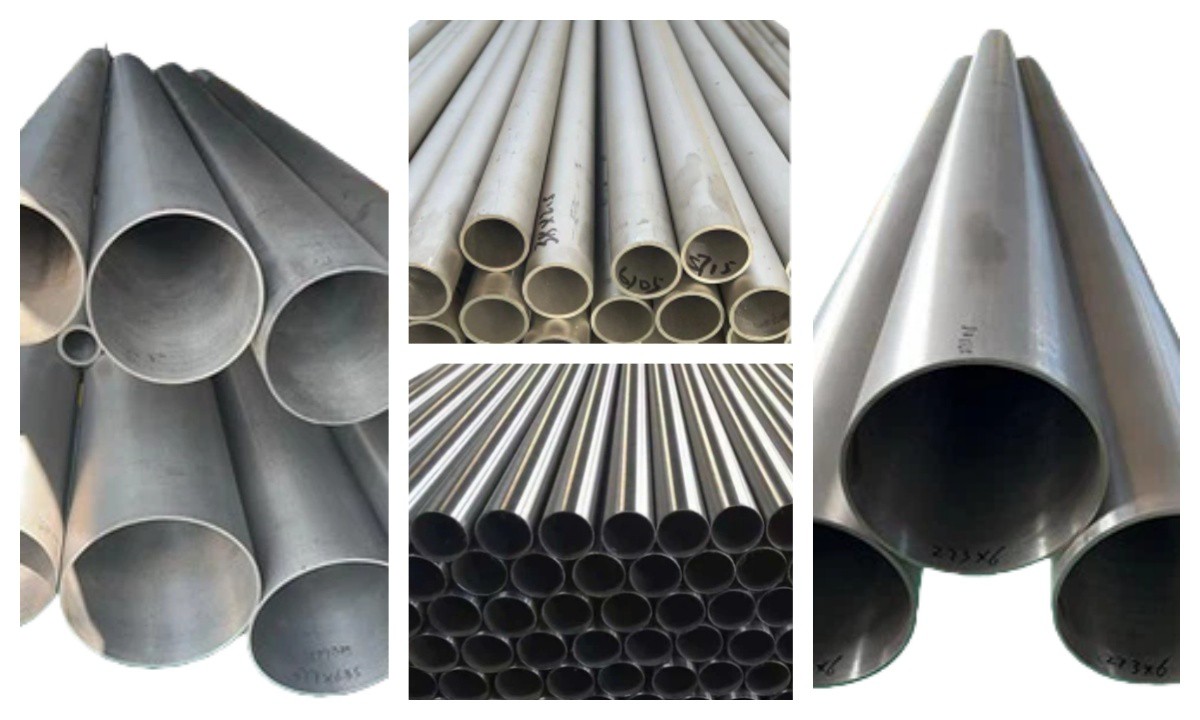
Ruihang Elaborate Material Co., Ltd. provides high-quality titanium and titanium alloy products. Our stringent welding processes ensure that we fully meet our customers' requirements.For more details, please feel free to contact us by email: Sam.Rui@bjrh-titanium.com