

Ten-Process Regime For Titanium Alloy Welding To Ensure High-Quality Weld Joints
Oct 26, 2026
Leave a message

Titanium exhibits high chemical activity at elevated temperatures. Above 600 °C, it readily reacts with oxygen, hydrogen and nitrogen. Contaminated welds become brittle and develop pores and cracks, which may lead to component failure. Reliable high-performance titanium alloy welds do not rely on a single welding method, but on closed-loop full-process control. The industry adopts ten process checkpoints covering pre-welding, welding execution and post-welding stages to guarantee weld safety for high-end equipment.
I. Clean Environment to Prevent External Contamination
1.Zoned isolation
Establish an independent clean welding area physically separated from carbon-steel and grinding zones to avoid cross-contamination from iron ions, dust and moisture.
2.Environmental requirements
Humidity ≤ 80 %; wind speed in the argon-arc welding area ≤ 1.5 m/s. Outdoor welding is prohibited in rainy, snowy, high-humidity or low-temperature conditions.
3.Personnel requirements
Personnel shall wear dust-free work clothes and clean sheepskin gloves. Bare-hand contact with groove surfaces is forbidden.
4.Work-site management
Carry out regular dust removal and iron-ion inspection to prevent impurities from entering the molten pool.
II. Pre-welding Cleaning of Base Metal and Filler Wire
- Remove oxide scale and burrs within 20-50 mm on both sides of the groove using stainless-steel wire brushes or hard-alloy tools.
- Degrease with anhydrous ethanol or acetone. Chlorine-containing solvents are prohibited to avert stress-corrosion cracking.
- For high-grade workpieces: perform pickling, rinse with pure water, then dry.
- Carry out dehydrogenation treatment for filler wires. Complete welding within 2 hours after cleaning to minimize pores and embrittlement.
III. Groove and Assembly Accuracy
- Prefer single-V grooves of 70°-80° to reduce filler metal consumption and shorten the high-temperature duration of the molten pool.
- Assembly gap ≤ 10 % of plate thickness. Use tooling fixtures to control misalignment.
- Seal the groove root to ensure back-side argon shielding.
- Excessive deviation of groove geometry or misalignment may cause incomplete root fusion, burn-through and failed gas shielding.
IV. High-Purity Argon Gas Control
- For high-end workpieces, argon purity ≥ 99.99 % with dew point < -40 °C.
- Equip pressure-stabilizing valves, flowmeters and filters. Rubber hoses shall not be used. Stop using gas cylinders when pressure drops below 0.98 MPa.
- Match gas flow rate with workpieces and trailing shields; improper flow rates result in inadequate shielding.
V. Multi-Zone Full-Process Argon Shielding
- Adopt three-fold shielding: main nozzle, back-side argon purging and trailing shield working in coordination.
- Gas shut-off timing: maintain gas supply until the weld and heat-affected zone cool down below 250 °C.
- For thick plates and pipe components, water-cooled copper shielding hoods may be used to maintain laminar-flow shielding.
- Objective: eliminate blue, purple or grey oxidation discoloration on welds.
VI. Welding Procedure and Heat-Input Control
- Tungsten-inert-gas (TIG) welding is preferred; laser or electron-beam welding may be applied for precision thin-wall components.
- Adopt low heat input to shorten high-temperature holding time and restrain grain coarsening.
- Strictly control welding current, travel speed and arc length; minimize transverse weaving.
- For multi-pass welding of thick plates: inter-pass temperature ≤ 100 °C; wait for cooling before subsequent passes.
- Pulsed welding stabilizes the molten pool, reduces porosity and balances penetration and grain control.
VII. Welding Operation Specifications for Stable Molten-Pool Behaviour
- The electric arc and filler wire shall remain within argon shielding throughout welding to sustain arc stability.
- Use current decay for crater filling at arc-out. Keep the trailing shield ventilating for post-arc cooling; do not remove shielding devices prematurely.
- Weld qualification test plates for each batch; record parameters and retain traceable procedure sheets.
- Standardize welder operations to secure consistent weld quality in mass production.
VIII. Post-welding Controlled Cooling and Stress-Relief Heat Treatment
Residual welding stresses impose severe risks on titanium alloy components. Vacuum or argon-protected stress-relief annealing shall be performed according to material properties and service conditions with precise temperature control. Quenching is forbidden. This eliminates residual stress, improves weld ductility and meets fatigue requirements for aerospace and pressure-bearing parts.
IX. Layered Non-Destructive Testing for Defect Detection
- Visual inspection: silvery-white weld appearance indicates acceptable quality; blue or grey discoloration signifies inadequate shielding.
- After cooling, carry out sequential PT (penetrant testing), RT (radiographic testing) or UT (ultrasonic testing) to detect internal defects such as pores and cracks.
- For high-fatigue-load components, add spot checks of metallography and hardness.
- Implement defect grading assessment; non-conforming workpieces must not proceed to subsequent processes.
X. Mechanical-Property and Service-Performance Verification for Process Closure
Acceptable non-destructive test results do not guarantee satisfactory service performance. Corresponding test coupons shall undergo tensile, bend and impact tests. Corrosion tests shall be added for corrosion-resistant service scenarios. Compile data to form WPS (Welding Procedure Specification). For special service conditions, conduct service-simulation tests to realize full-loop process validation.
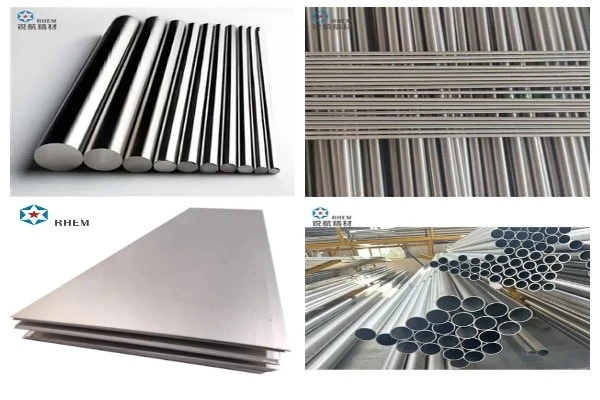
Ruihang supply optimal quality titanium products for your precision components production. For more details about Titanium Alloy Products, please feel free to contact us via email: Sam.Rui@bjrh-titanium.com