

Innovative Application Of Titanium Alloys in Professional Rackets
Sep 15, 2026
Leave a message

Advancements in competitive sports are inseparable from material innovation. For badminton, tennis and table‑tennis rackets, weight, rigidity, toughness and shock‑absorbing performance directly determine hitting outcomes. As intensity in professional competitions rises, wooden, aluminium and full‑carbon rackets fail to strike a balance between light weight, high strength, high resilience and fatigue resistance. Featuring excellent mechanical properties, aerospace‑grade titanium alloys, combined with composite structures and new manufacturing processes, enhance racket performance and propel racket‑based sports into a new competitive era of advanced materials.
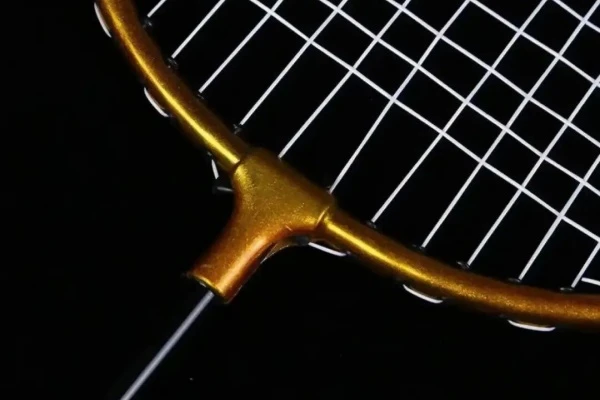
I. Core Material Properties of Titanium Alloys for Professional Rackets
- Core principle: material properties tailored for professional competition to address pain points of conventional rackets
- Low density and high specific strength: comparable to aluminium in weight yet far stronger. It achieves both light weight and high strength, solving the problems of easy deformation of carbon rackets and sluggish power delivery caused by heavy metal rackets.
- High elasticity and fatigue resistance: it quickly recovers shape after force‑induced deformation and resists permanent deformation under powerful repeated strokes, making it ideal for high‑frequency, high‑intensity training and competitions.
- Superior shock absorption: low vibration transmission cushions impact upon ball contact and reduces sports‑related injuries to wrists and elbows.
- Good corrosion resistance for consistent long‑term service life.
II. Innovative Applications of Titanium Alloys in Various Types of Professional Rackets
1. Boosting explosive power and control stability (badminton rackets)
Titanium alloys are widely adopted in high‑end badminton rackets through titanium‑carbon composite technologies.
- Yonex gForce Ti: titanium‑alloy composite material is embedded in the upper section of the racket frame to raise swing inertia. It delivers stronger smashing power without adding extra weight. Paired with frame compression structures, it restrains frame deformation, stabilises the racket surface and enlarges the sweet spot for greater fault tolerance.
- Victor E.TITANIUM: aerospace‑grade titanium alloy is implanted at the 3‑o'clock and 9‑o'clock stress zones of the frame. While preserving the lightweight merit of carbon fibre, it improves deformation resistance and vibration absorption, balancing offensive performance and control for high‑intensity matches.
2. Enlarging the sweet spot and optimising power transmission (tennis rackets)
Titanium alloys mitigate energy loss upon powerful tennis strokes.
- Pure‑titanium inserts or titanium‑alloy mesh embedded in racket frames optimise energy transfer and hitting efficiency. They also improve stress distribution, expand the sweet spot and minimise power loss from off‑centre hits.
- Combined with topological optimisation and additive manufacturing, racket weight is kept within the golden range of 285–305 g. Its shock‑absorbing properties lower the risk of tennis elbow.
3. Enhancing rebound speed and hitting precision (table‑tennis rackets)
High‑end table‑tennis rackets feature dual‑titanium and dual‑carbon composite blades.
- Two layers of lightweight titanium alloy embedded in the blade increase rigidity and reduce deformation on impact, bringing faster rebound, solid block returns and powerful loop strokes.
- Titanium alloy filters out redundant vibration for clear tactile feedback, enabling athletes to manipulate spin and placement, well‑suited for fast‑paced offensive‑defensive professional contests.
III. Core Advantages of Titanium‑Alloy Rackets over Conventional Materials
Adopting titanium alloys in professional rackets is more than simple material substitution; it represents comprehensive upgrades in performance, craftsmanship and hitting experience, with three core merits:
- Performance improvement: realising light weight together with high strength, high resilience, high rigidity and high stability. It boosts explosive power, control accuracy and sweet‑spot fault tolerance to meet professional competitive demands.
- Durability improvement: fatigue‑resistant and corrosion‑resistant. It resists deformation and ageing under frequent heavy‑use, outperforming carbon and aluminium rackets for long‑term high‑intensity training.
- Injury‑protection improvement: shock absorption cushions hitting impact and eases strain on wrists and elbows, reconciling competitive performance with sports safety.
IV. Refinement and Popularisation of Titanium‑Alloy Rackets
- Precision forming, 3D printing, topological optimisation and other technologies enable fine customisation of titanium‑alloy components. Centre of gravity, rigidity and shock‑absorbing capacity can be adjusted for different sports and player styles, shifting racket production from mass‑produced standardisation toward personalised customisation.
- Falling titanium‑material costs and mature domestic manufacturing processes are bringing titanium‑carbon composite rackets from professional tournaments into the high‑end consumer market.
- Ongoing integration of new materials and intelligent manufacturing will broaden and refine titanium‑alloy applications in sports equipment, lifting both competitive standards and user sporting experience.

Ruihang, as a direct manufacturer of titanium products, supply optimal quality raw materials for your precision components production. If you have any purchasing needs about titanium alloy bars/plates, please feel free to contact us via email: Sam.Rui@bjrh-titanium.com